Can a hospital clarify how an innovative service might be priced while the underlying technology is still being developed? A notice published by China’s National Healthcare Security Administration on 15 September and its policy explanation describe a trial process that brings consideration of medical service price items forward. It prepares a route for a service after clinical authorisation; it does not itself authorise clinical use or charging.
The process targets new technologies with substantial clinical value, equipment addressing major diagnostic or treatment needs, and new consumables chiefly benefiting patients and changing surgical approaches. A tertiary hospital applies to its provincial healthcare security authority. One hospital can lead an application for a technology or product, so other institutions need not submit duplicates. The arrangement gives pricing officials an earlier view of the proposed service while limiting repeated assessments.
Timing still depends on the relevant regulatory pathway. Hospitals may apply at specified stages after a new technology is permitted to enter clinical research, or after a product enters the special review procedure for innovative medical devices, and before formal approval for clinical use. A favourable preliminary conclusion is guidance for a later pricing decision. If research fails, effectiveness disappoints or approval is refused, the proposed conversion to a formal price item ends.
After clinical approval, a province may add a price item where none covers the service, add one conditionally where clinical value or economic merit remains uncertain, or use an existing compatible item. Conditional addition can permit a small number of local institutions to charge under the rules, alongside a commitment to a real world assessment of value for patients and the insurance system. Economic performance may also require further assessment after an item is added or an existing one is used.
For hospitals, the practical question is how to build evidence on patient benefit, resources used and later evaluation while development continues. Earlier pricing discussions cannot replace safety and effectiveness review, and the documents report no demonstrated reduction in costs. Both linked pages come from the same authority and explain one policy; they are not independent evaluations of its implementation.
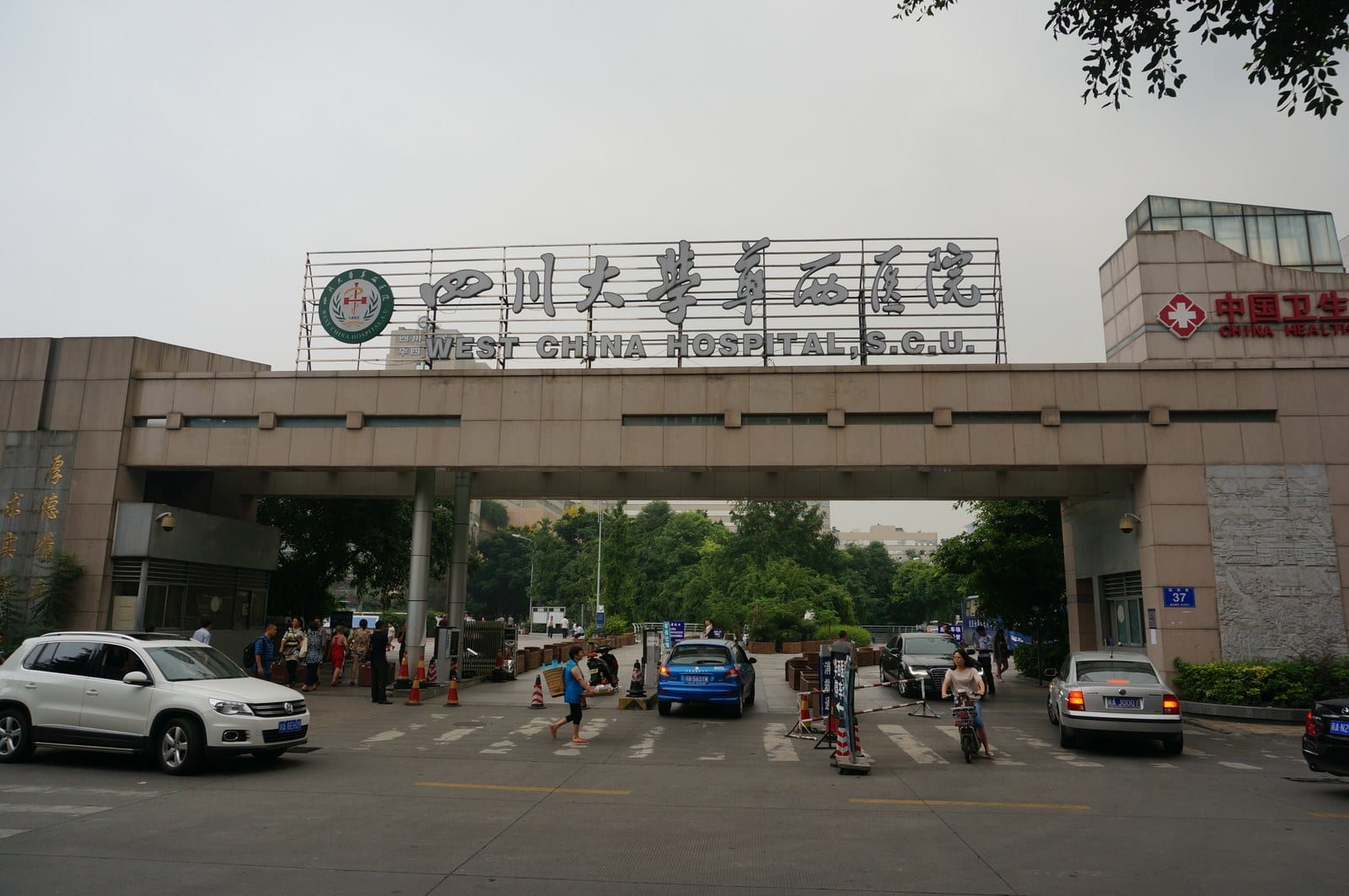
Cover: West China Hospital entrance, photographed in 2014; an archive illustration. Photograph by Mao Mao de Ri Ji Ben, CC BY-SA 4.0. Image source · Licence
