Including a test in a guideline does not make it a stand-alone treatment decision or a universal requirement. The 23 September update to NICE NG253 advises considering procalcitonin, or PCT, in specified groups with suspected sepsis. The recommendation is best understood alongside the trial informing it.
NG253 covers people aged 16 or over who are not, and have not recently been, pregnant. Recommendations 1.8.2 and 1.8.16 in the management chapter include PCT among tests to consider in high- and moderate-risk groups. Timely availability matters because the result is intended to inform early clinical judgement within established management.
The PRONTO trial compared access to a PCT-based decision algorithm with usual care in 20 emergency departments in England and Wales. Clinicians could depart from the algorithm. The intervention therefore combined a test, guidance and clinical decisions, rather than isolating a laboratory measurement.
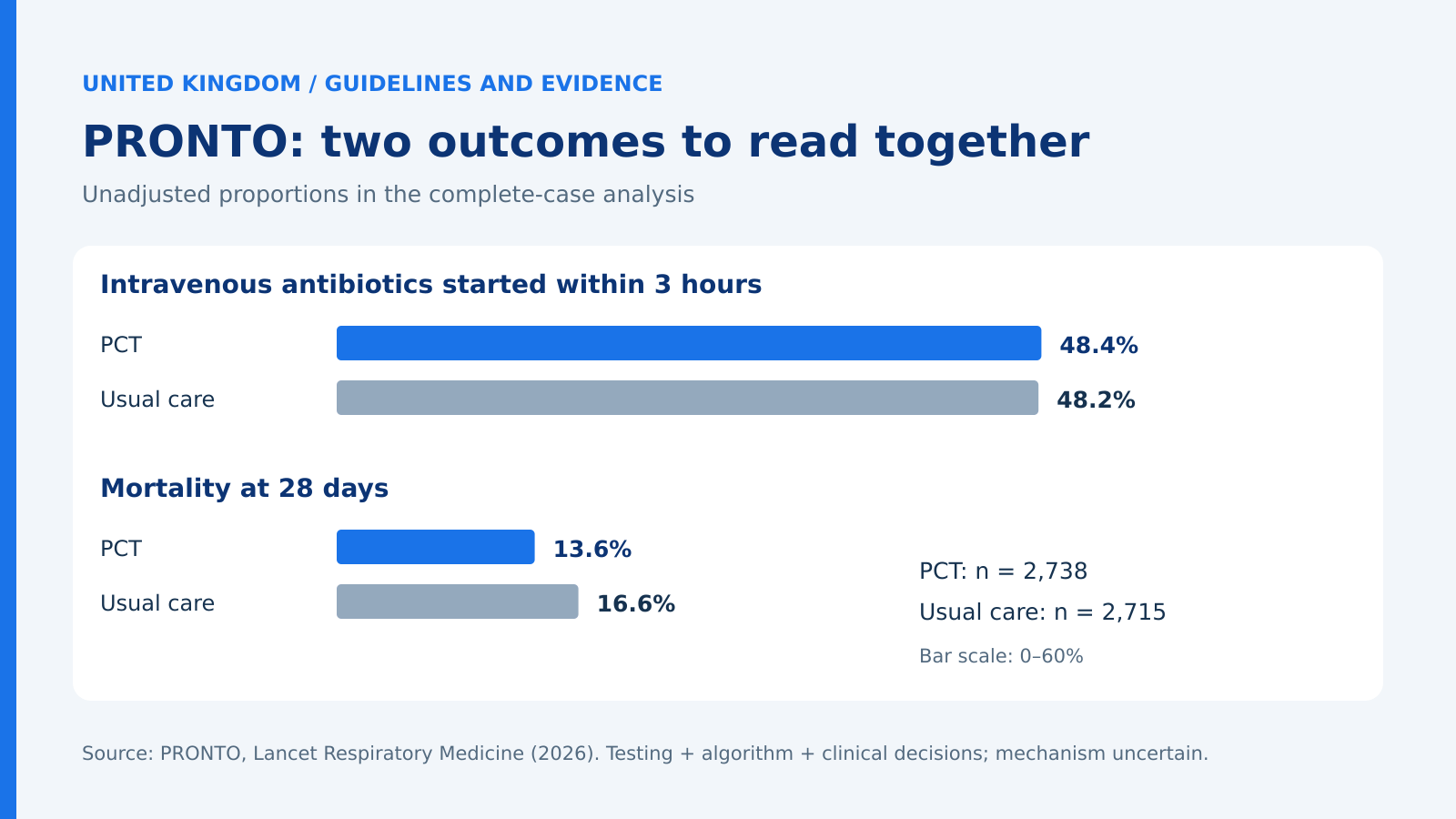
Of 7,667 participants randomised, 5,453 entered the complete-case analysis of both coprimary outcomes: 2,738 in the PCT group and 2,715 in usual care. Intravenous antibiotics began within three hours in 48.4% and 48.2%, respectively. Mortality at 28 days was 13.6% and 16.6%. The antibiotic result does not support a simple explanation that the intervention reduced mortality by producing earlier treatment.
NICE’s rationale also notes no corresponding improvement in antibiotic initiation time, duration, length of stay or intensive-care admission. The mechanism behind the mortality difference remains unclear. Open-label allocation and the difference between randomised and complete-case populations add considerations when interpreting the findings.
For teams reviewing local pathways, practical questions follow. Will results arrive in time to inform decisions? Does the proposed population match the relevant risk groups? Who interprets the result alongside other information? Evaluation after introduction should examine the process and outcomes, rather than merely counting tests. The UK guidance provides evidence and a proposed place for testing; implementation still depends on local resources and clinical governance.
NIHR funded PRONTO, and manufacturers supplied equipment free of charge. The cover presents unadjusted complete-case proportions. This article discusses research and guidance, not individual treatment.
References