News archive
Hospital-linked elder care: three Chinese cases and a community participation framework
Three hospital-linked care arrangements in China illustrate different ways of organising medical support. A WHO community-participation report offers a separate framework, with limits to comparison.

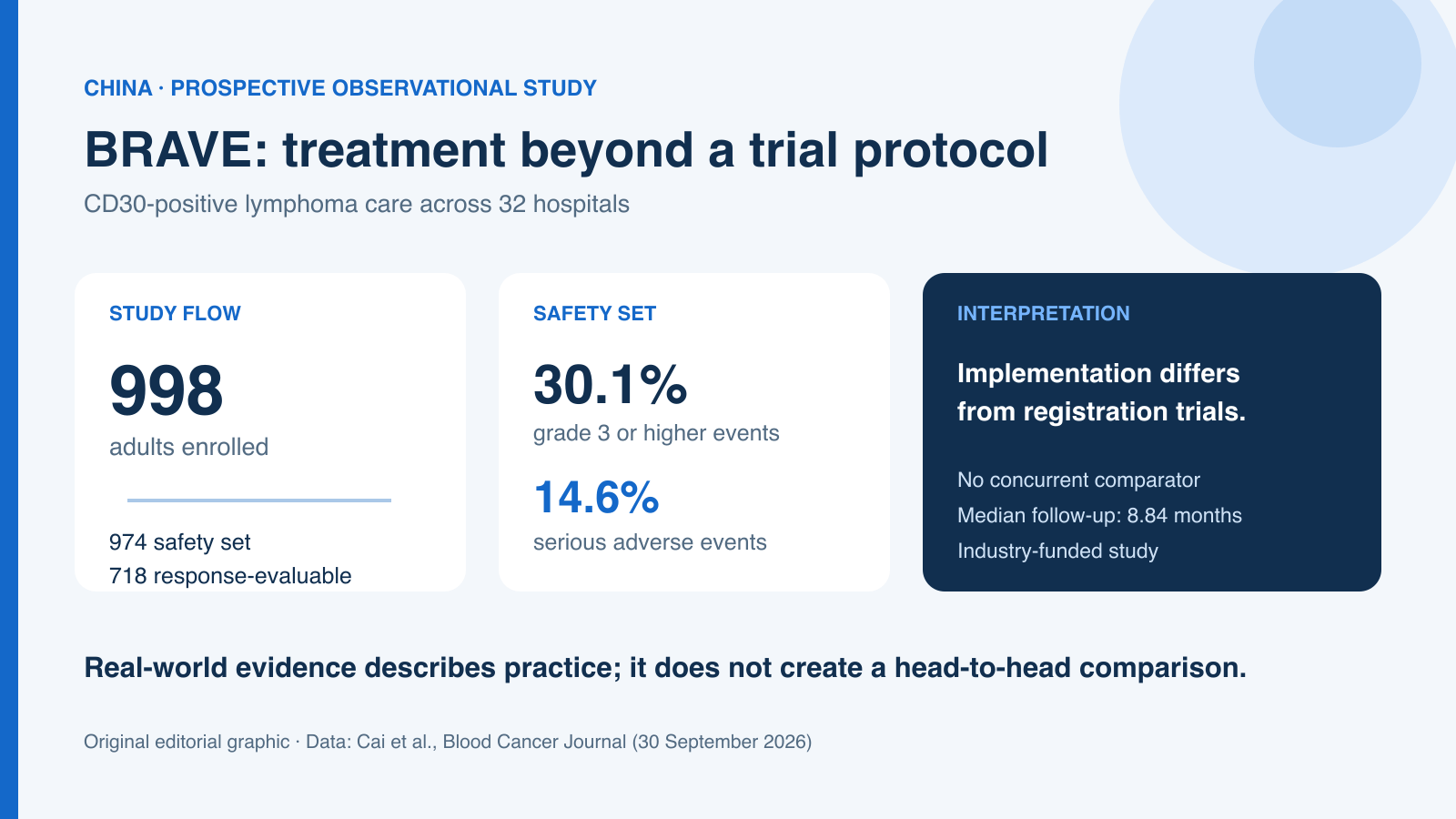
The BRAVE study across 32 Chinese hospitals: real-world treatment differed from trial protocols
A prospective study of 998 adults with CD30-positive lymphoma describes treatment delivery, safety and response assessment in routine Chinese care, while showing why indirect comparisons with registration trials need care.
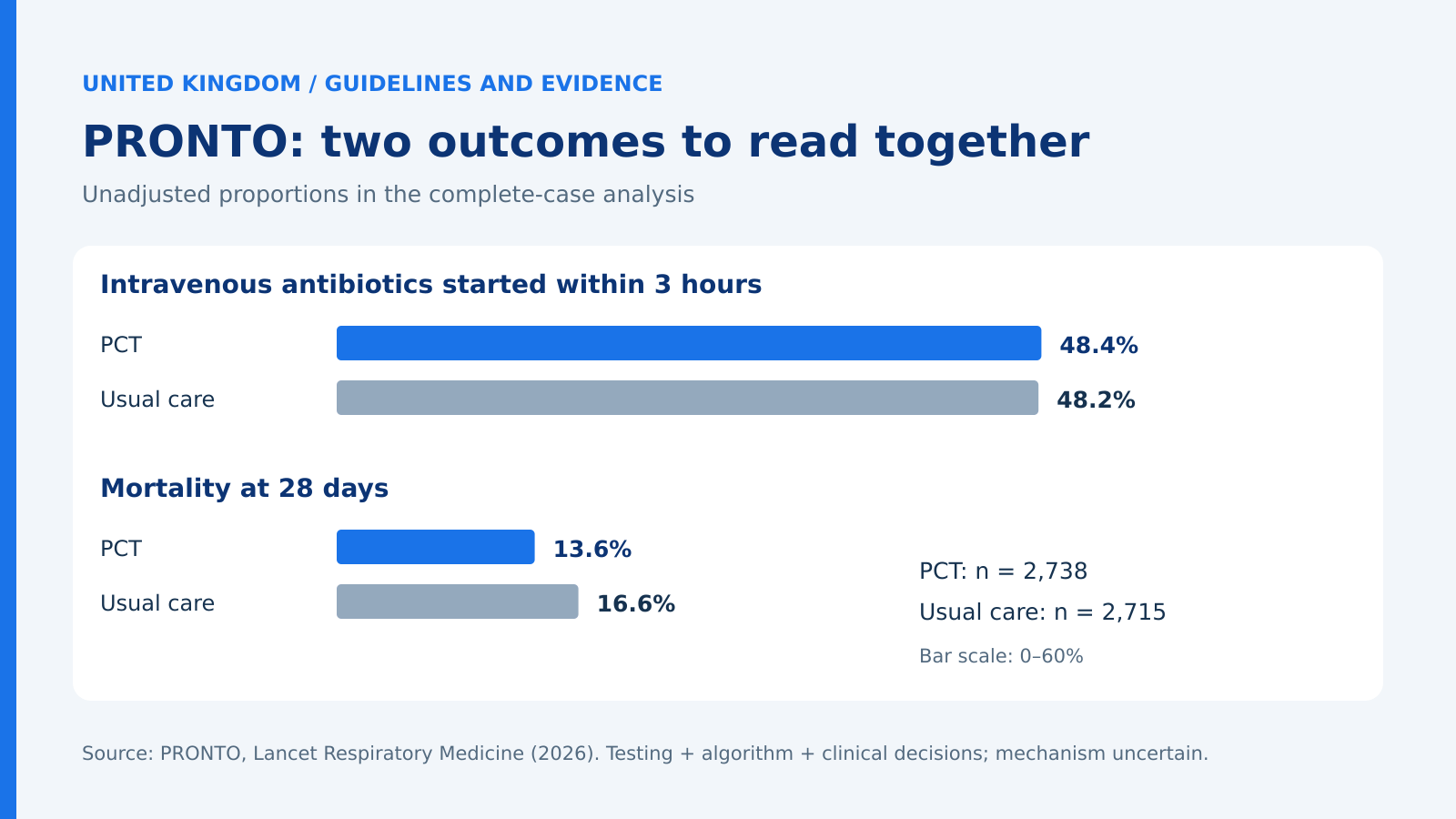
Why NICE says to consider PCT: reading sepsis guidance alongside PRONTO
The recommendation depends on patient selection, timely results and clinical judgement. PRONTO's antibiotic and mortality findings require careful interpretation.
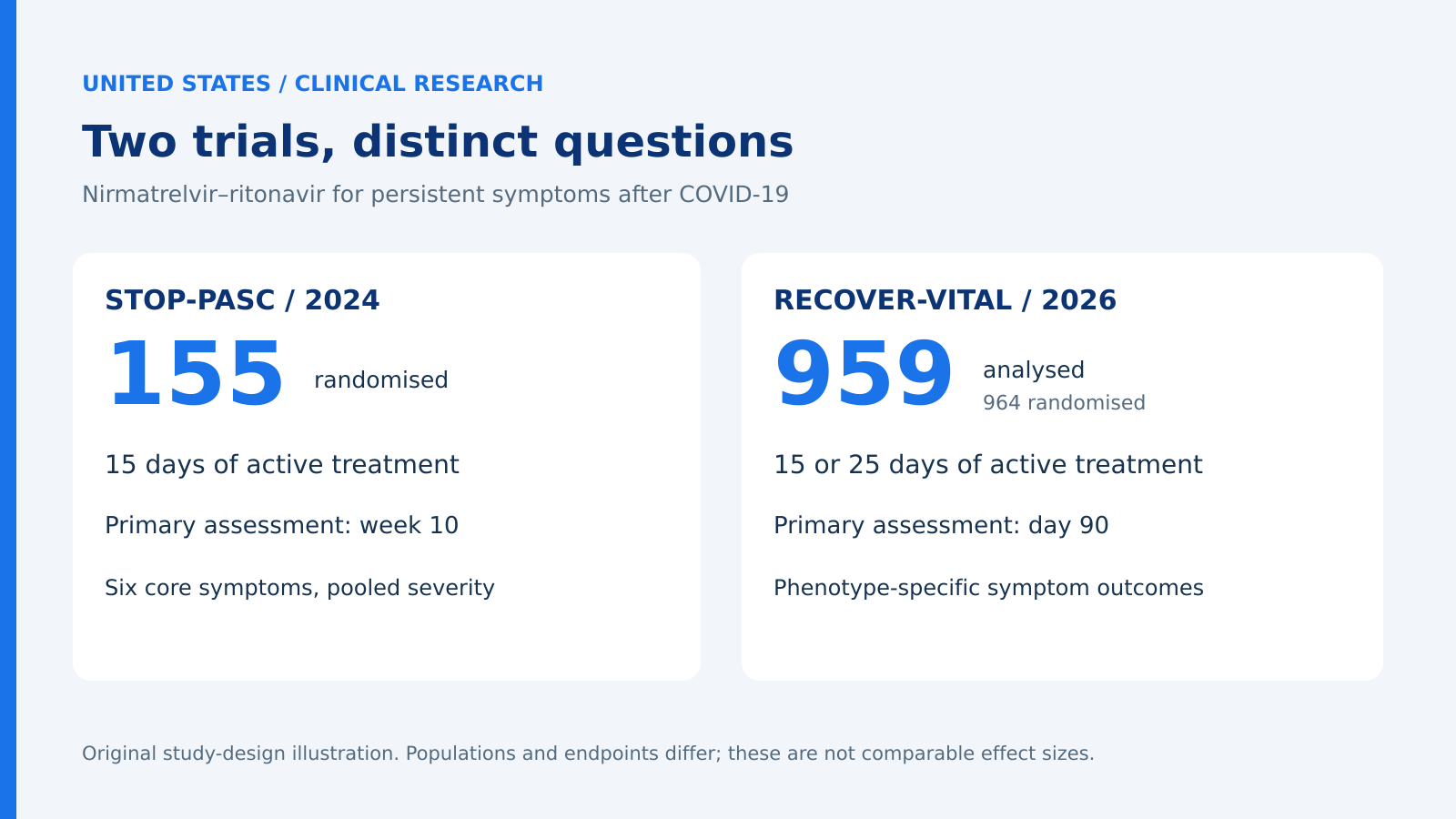
Can a longer antiviral course improve long COVID? Reading two trials together
RECOVER-VITAL broadened the evaluation of extended antiviral treatment. Like STOP-PASC, it found no significant benefit on its primary symptom outcomes.
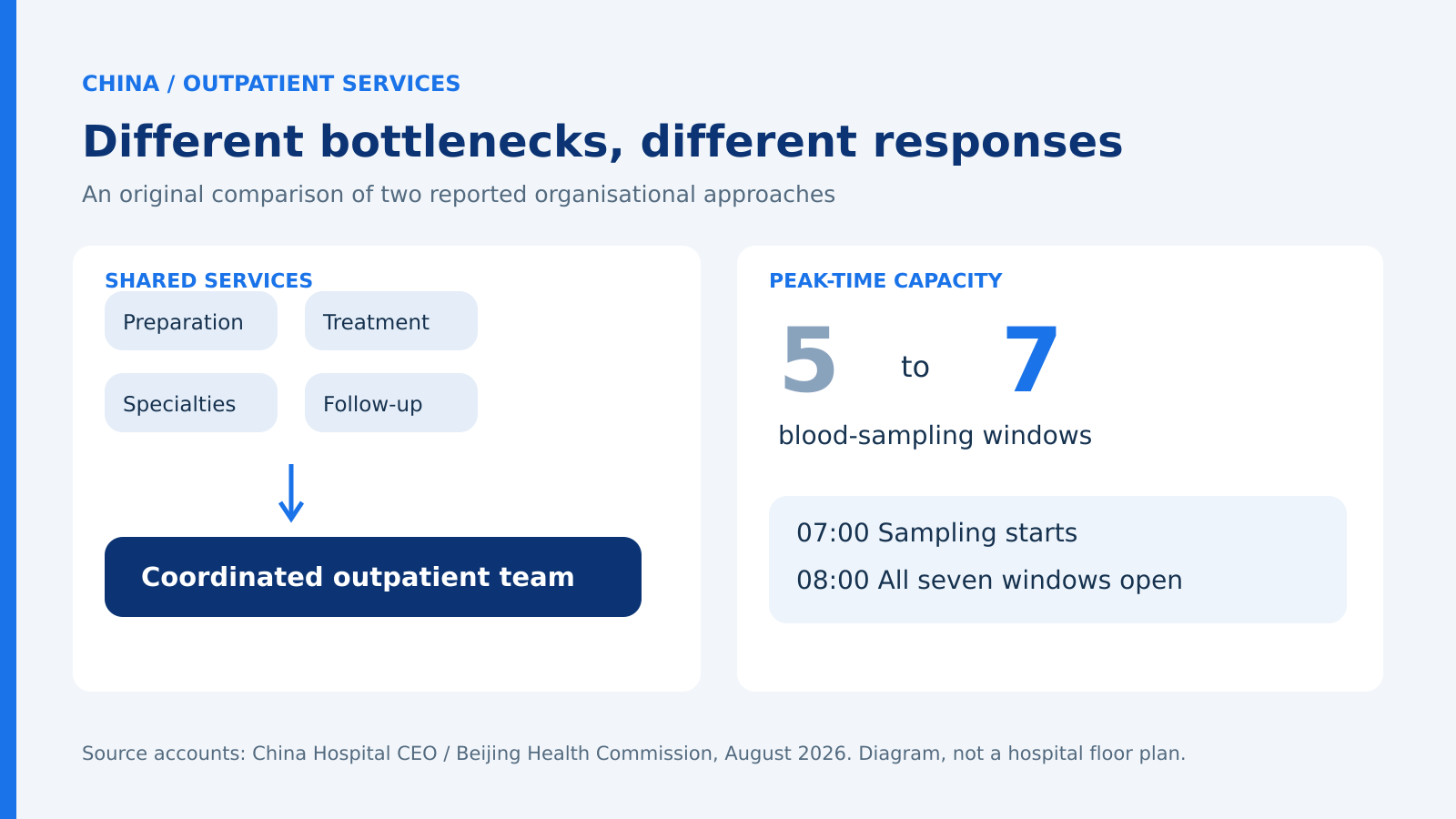
Improving outpatient flow: coordination across departments and capacity at peak times
Two Chinese hospital accounts address different operational problems. Distinguishing coordination from peak capacity helps clarify what each example can inform.
Moving children's eye monitoring beyond specialist hospitals
A UK project is adapting compact OCT for children. Portability must be considered alongside reliable imaging, review and the next step in care.

Predicting enhancement from non-contrast MRI: the gap between a metric and a decision
A retrospective AI study evaluates tumour enhancement detection. Its imaging results do not yet establish when patients can safely forgo contrast.
When medical AI raises a concern: connecting reporting with version tracing
A UK commission links accessible reporting routes with product identification. The proposals focus attention on what happens after a concern is noticed.
Making ward rounds work for handover, decisions and teaching
A ward round must connect overnight information with decisions, learning and follow-up. Clear responsibility matters as much as the order of discussion.

Joining a research group abroad: from understanding the question to contributing
Reading, meeting notes and a manageable shared task can help a visiting clinician move from following discussions to making a specific contribution.

Clinical feedback that connects one discussion with the next attempt
Useful feedback links an observed behaviour to the learner's reasoning and a specific next step, with an opportunity to review what changes in practice.

After medical AI reaches the ward, how should its usefulness be judged?
Evaluating documentation and imaging tools requires a view of the whole workflow, including review, correction and the handover of results.